Share

NOTICIAS


Visit this project On line!. |Ver Más|

History

Fundación Defensores de la Naturalezais formed by distinguished citizens which vocation of service  motivated them to work in favor of the conservation and sustainable development since 1983.  The pioneers of the project “Defensores de la Naturaleza”  were Magaly Rey Rosa and Thor Janson, activists compromised with the environmental conservation in Guatemala, conservationists at heart.

Defensores de la Naturaleza - HistorySince Magaly and Thor  began to work in the idea of “Defensores de la Naturaleza” they thought about an organization committed to the environmental education and use of natural resources, and for that purpose it was necessary to recognize the institution at a national level.  They spent their first years of work spreading the idea of “Defensores” through publications in writing, conferences, educational material, etc.  During these first years was created our logo- the anteater- in the eighties the inhabitants of Sierra de las Minas assured that gigant anteaters lived in the area, and that they were the biggest and strongest animals of the same, showing mutual respect with the Jaguar.  That is why Magaly and Thor chose the anteater as logo, because it represented what they wanted for “Defensores”, to be the biggest and strongest organization in the area.

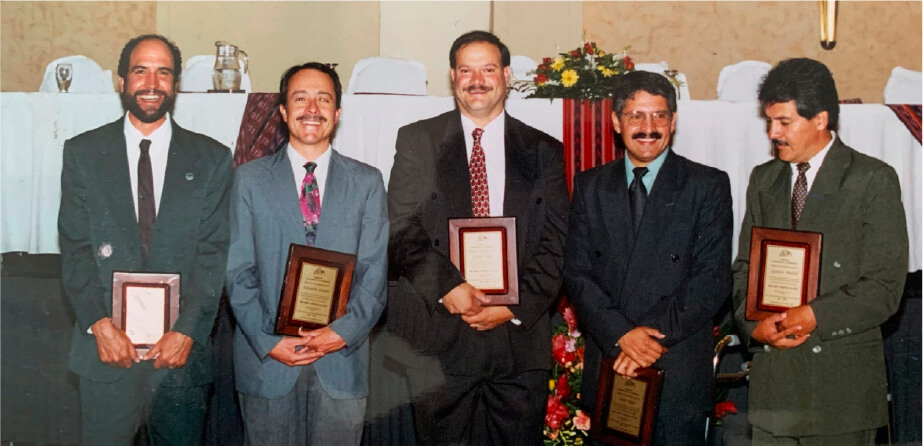
By 1987 “Defensores de la Naturaleza” had become more important and obtained supporters, and the legal figure of “Fundación” was created, acting as founders Luis Alberto Móvil, Magaly Rey Rosa, Julio Antonio Cabarrús, Katherine Herrera and Roberto Alcahé.  The first action with the purpose of managing the natural resources was to look for recognized scientists to study the abundant forests and biodiversity in the country, so the first group of researchers went to Sierra de las Minas to begin the studies and necessary procedures to obtain the declaration of protected area.

Wisely during the nineties and with the support of The Nature Conservancy –TNC- and the children of Sweden, we began buying land for the conservation in strategic areas of Sierra de las Minas, that today are the guarantee for the long term conservation in the area.  These lands are the wealth of the country and of the Guatemalans, and guarantee a diversity of environmental services for the local and regional population.

Sierra de las Minas was declared protected area on October 4, 1990 under the category of “Biosphere Reserve”, because in this area  is located the most important cloud forest of Middle America, which interacts with ladino (mixed race) population-- Q’eqchies and Poqomchies.

On July 11, 1996, responding to the conservation priorities of the country and considering that the wetlands are the richest ecosystems in the biodiversity of the planet, we managed to declare as protected area the wetland located in the outlet of Polochic River. So we start our next conservation commitment:  “Vida Silvestre Bocas del Polochic Refuge”.

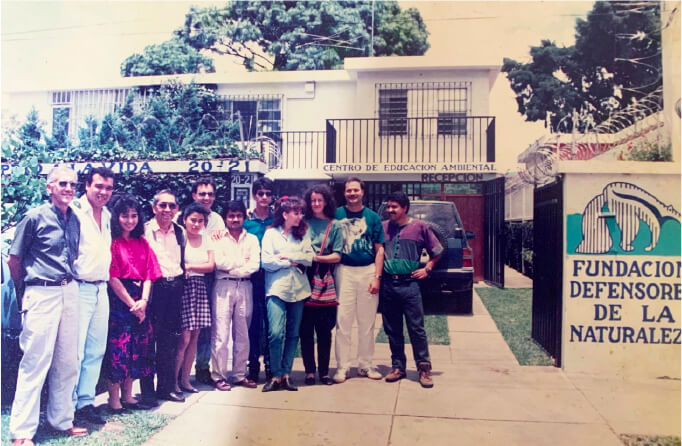
We learned that people are the most important part for conservation so we took up again the need of making aware of the environment and educate specially the children and young people of our country.  So in 1997, we accepted a new challenge:  the “United Nations National Park”.  It is located in the old Amatitlán road, and at present is the center of the environmental education, and a green refugee for the population of the department of Guatemala.

In 1999, we began the first co-management with the National Council of Protected Areas –CONAP-(for its initials in Spanish), assuming the challenge of protecting  “Sierra del Lacandón National Park” in Petén, a tropical forest with many species of flora and fauna.

The experience obtained with our work in the protected areas makes us recognize the importance of the communities in and around the protected areas, which is more obvious in the use of the environmental services of such areas--specially  water resources.  That is how was born the idea of the initiative “Water Fund of  Motagua Polochic System” which promotes the dialogue between all the water users, and the investment in the conservation of the forests.  The construction process of the Water Fund began in 2003, and actually it has a direct investment of industries, and of associations in the area for the  adequate use of  water basins.  The Fund has an Advisory Board and an Investment Committee formed by representatives of different groups of water users:  communities and the committees of the basin, industries, municipalities, irrigation users, hydroelectrics.

The forest and the dry pine forest that have endemic species of flora and fauna as the iguana (iguana garroba) and the lizard (lagarto escorpión) are special and hardly valued ecosystems in our country.  We are aware  that these ecosystems are hardly valued at a national level, and given the social characteristics of the area—in its majority private propierties-in 2003 we began the activities that have been oriented to the promotion, declaration, and use of the private and municipal natural reserves.  The programs have environmental education projects,  which expect  that the inhabitants of the area  increase the valoration and protection of these ecosystems.